Search Engine Optimization (SEO) is the practice of enhancing a website to increase its visibility on search engines like Google, Bing, and Yahoo. The better visibility your pages have in search results, the more likely you are to attract attention and draw prospective and existing customers to your business.
SEO is essential for businesses aiming to increase their online visibility and attract potential customers. By optimizing your website for search engines, you can improve your rankings in search results, making it easier for users to find you. Higher visibility leads to increased website traffic, which can result in more conversions and sales. Additionally, SEO helps build brand credibility and trust, as users tend to trust websites that appear higher in search results. It also offers valuable insights into customer behavior through analytics, enabling you to tailor your marketing strategies effectively.
Keyword Research
Keyword research is the foundation of any successful SEO strategy. It involves identifying the terms and phrases that potential customers use to search for products, services, or information related to your business.
Identify Keywords
To find relevant keywords that your target audience is searching for, you can analyze search volume, competition, and trends. Understanding what terms people are using allows you to choose the most effective keywords for your content, ensuring your site appears in relevant search results.
Using tools like Google Keyword Planner, SEMrush, or ChatGPT can help you discover relevant keywords that your target audience is searching for.
Long-Tail Keywords
Focusing on long-tail keywords is a strategic approach. Long-tail keywords are more specific and typically less competitive than broad keywords. For example, instead of targeting "digital marketing," you might target "digital marketing for small businesses in Tulsa." These keywords often have a higher conversion rate because they target users who are further along in the buying process.
Align Your Content with Search Intent
Understanding and aligning your content with search intent is crucial for ranking well on search engines. Search intent, also known as user intent, is the purpose behind every search query.
Aligning your content with search intent is essential for improving relevance, enhancing user satisfaction, and boosting search engine rankings. Here are some strategies to achieve this:
Keyword Research and Intent Mapping: Conduct thorough keyword research to understand the intent behind each keyword. Use tools like Google Keyword Planner and Ahrefs to analyze search volume, competition, and intent. Map these keywords to different stages of the buyer's journey and create content that addresses each stage.
Content Structure and Optimization: Structure your content to match the user's search intent. Use clear headings, subheadings, and a logical flow to guide users through the content. Optimize on-page elements like meta titles, descriptions, and headings to align with the target keywords and user intent.
Regular Content Audits and Updates: Conduct regular content audits to ensure your existing content remains relevant and aligned with current search intents. Update outdated information, add new insights, and optimize for new keywords to keep your content fresh and valuable. Here are some key points to consider:
Types of Search Intent
Informational: When someone is trying to learn more about a topic.
Navigational: When someone is searching for a specific website or page.
Commercial: When someone is looking to learn more before making a purchase.
Transactional: When someone is ready to complete a purchase or take a specific action.
Content Matching
Matching your content to user intent is a critical component of SEO success. User intent can be categorized into three main types: informational, navigational, and transactional. Understanding and addressing these intents with tailored content is essential for meeting your audience's needs and boosting your search engine rankings.
Informational Queries: Users seeking information typically use queries like "how to," "what is," or "best ways to." To match this intent, create detailed blog posts, guides, and tutorials that provide valuable insights and answers. For instance, a blog post titled "How to Optimize Your Content for SEO" can attract users looking for SEO tips and strategies.
Navigational Queries: These queries involve users searching for a specific website or page. Ensure your site structure and internal linking are optimized so users can easily find what they're looking for. For example, clear navigation menus and a well-structured sitemap help guide users to relevant sections of your site.
Transactional Queries: Users with transactional intent are ready to make a purchase or take a specific action. Product pages, service descriptions, and landing pages should be optimized for these queries. Include clear calls to action (CTAs), detailed product information, and easy navigation to facilitate conversions. An example is a product page titled "Buy the Best SEO Tools Online" with direct purchase options.
User Experience
A positive user experience (UX) is crucial for retaining visitors and improving your search engine rankings. When users find your content helpful and easy to navigate, they are more likely to stay longer, interact with your site, and convert. Here are some key elements to focus on:
Answering User Queries: Your content should directly address the user's query. Use clear headings, bullet points, and concise paragraphs to make information easy to find. For example, if your blog post is about "SEO Best Practices," ensure each best practice is a subheading with detailed explanations.
Site Speed and Mobile Friendliness: Fast-loading pages and mobile-friendly designs are essential for a good user experience. Use tools like Google PageSpeed Insights to test and improve your site speed. Ensure your site is responsive and provides a seamless experience across all devices.
Engaging Visuals and Interactive Elements: Incorporate images, videos, infographics, and interactive elements to make your content more engaging. For example, a video tutorial on "How to Use SEO Tools" can enhance user engagement and provide a better understanding of the topic.
Improving UX not only satisfies your visitors but also signals to search engines that your site is valuable, leading to better rankings.
SERP Analysis
Analyzing the top search engine results pages (SERPs) for your target keywords provides valuable insights into what content ranks well and why. This process involves studying the top-ranking pages to understand the content type, structure, and optimization techniques they use.
Identify Content Gaps and Opportunities: By analyzing the top results, you can identify gaps in the content that your competitors may have missed. This allows you to create comprehensive content that fills those gaps and stands out. For example, if the top results for "SEO Tips" lack detailed case studies, you can include case studies in your content to provide additional value.
Understand User Intent and Content Format: The type of content that ranks well often reflects the user's intent. For example, if the top results for "best SEO tools" are listicles, you should consider creating a similar format. Additionally, pay attention to the length, style, and format of the top-ranking content to align your content accordingly.
Optimize for Featured Snippets and Rich Results: SERP analysis helps you understand the types of rich results and featured snippets that appear for your target keywords. Optimize your content to increase the chances of appearing in these prominent positions. For instance, use structured data and provide clear, concise answers to common questions to improve your chances of being featured.
By thoroughly analyzing SERPs, you can create content that not only meets user expectations but also outperforms competitors, leading to improved search engine rankings.
EXAMPLE
For example, let’s consider the search query “how to create a content calendar for social media.” The top search results for this query are typically blog posts or guides, not product pages. This indicates that users are looking for educational content to help them create a content calendar.
On the other hand, a search query like “buy social media management tools” will return product ads and ecommerce pages, as Google understands that the user intent is to make a purchase.
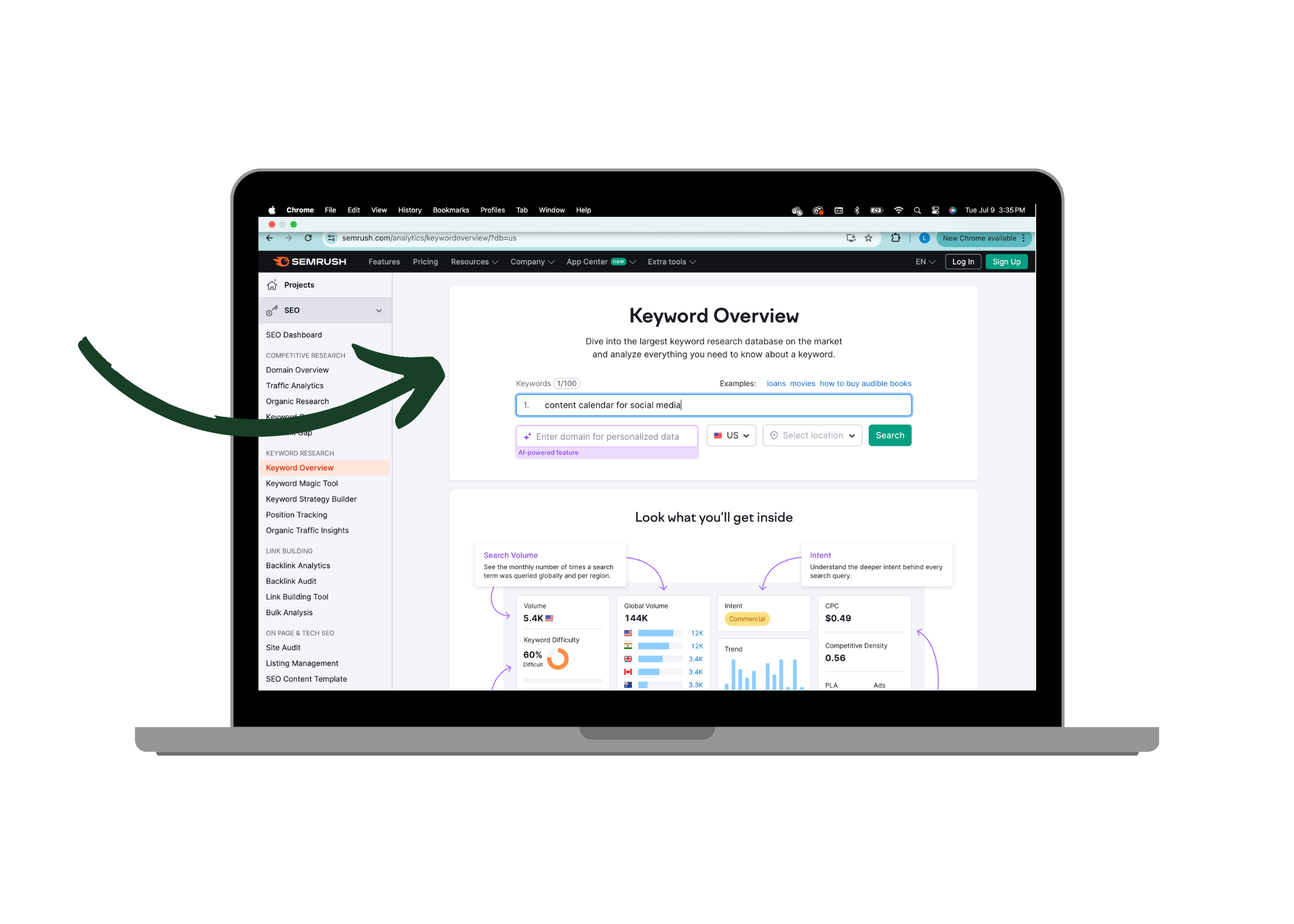
To quickly determine a keyword's intent, you can use tools like Semrush’s Keyword Overview tool. By entering your keyword, you can see the search intent and tailor your content accordingly. For example, the keyword “content calendar for social media” might show informational intent, suggesting that people are likely looking for guides and templates.
Optimize Your Website for Mobile
Mobile optimization is more critical than ever. According to Google, mobile searches make up more than half of all searches on Google.com. Moreover, people are five times more likely to leave a site if it isn’t mobile-friendly . This means your website must be responsive and provide a seamless user experience across all devices.
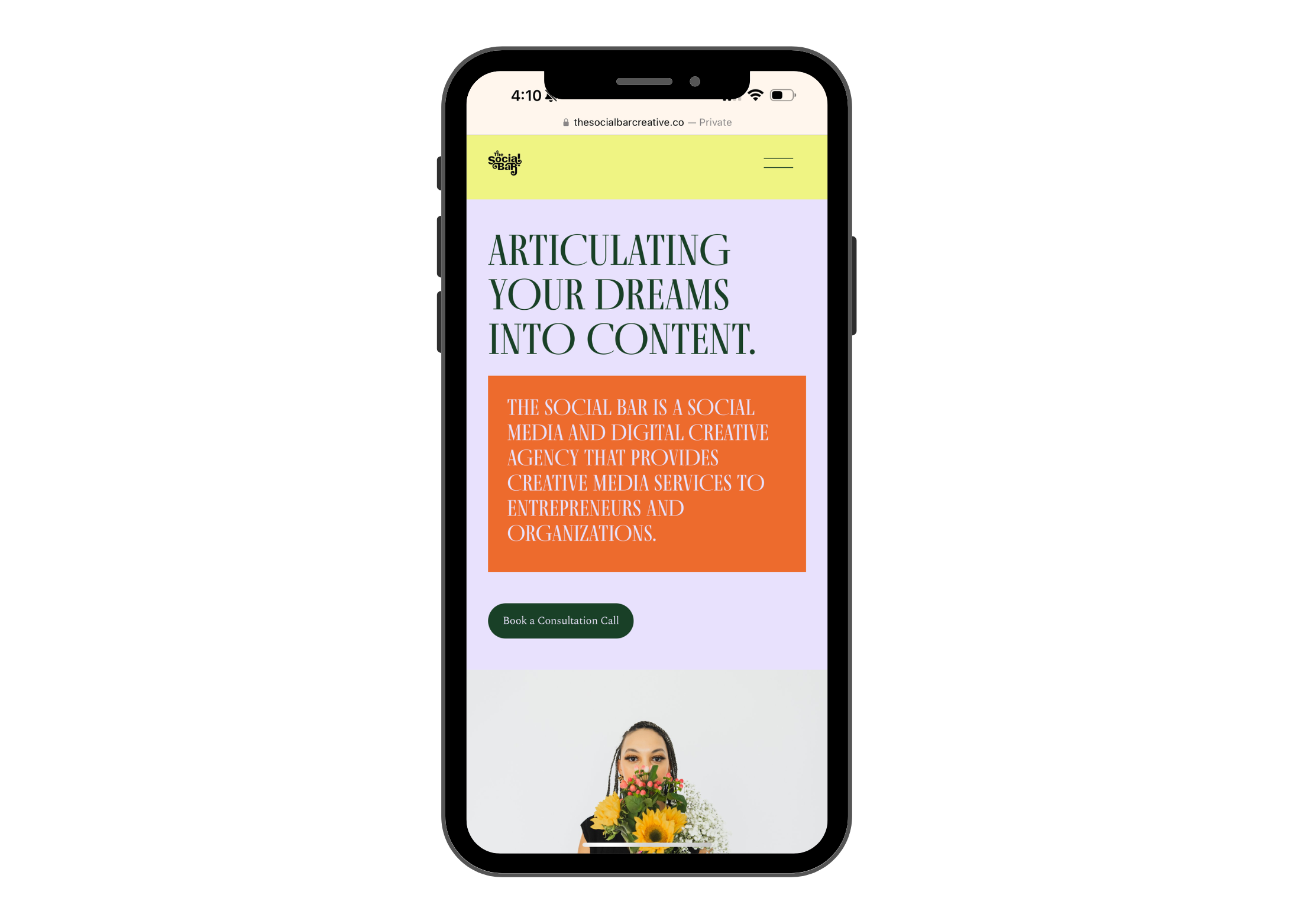
Mobile optimization Tips
Responsive Design: Ensure your website layout adjusts smoothly across different screen sizes.
Fast Loading Times: Mobile users expect quick loading times. Optimize images, leverage browser caching, and minimize JavaScript to improve speed.
User-Friendly Navigation: Simplify navigation menus and make buttons easily tappable.
Work smarter not
harder
Utilizing AI in SEO can significantly enhance your efforts by automating and optimizing various tasks. Here are a few prompts to use with AI text analysis tools to inform, streamline, and improve your SEO research and analysis:
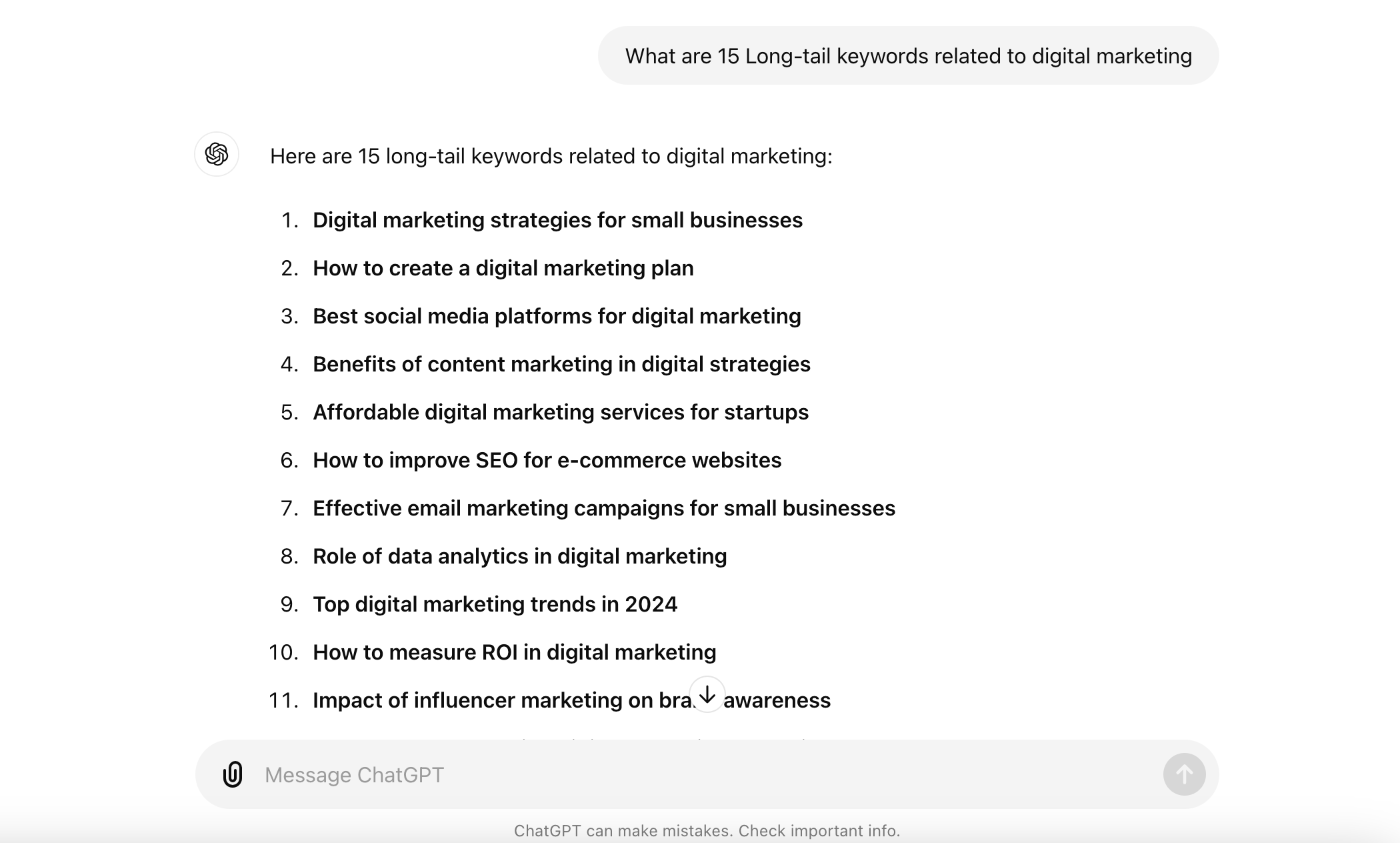
AI-Powered Prompts for SEO Optimization
Keyword Research
“Generate 15 long-tail keywords related to [your topic].”
“Identify the top 10 keywords my competitors are ranking for.”
Content Creation
“Create an outline for a blog post on [your topic].”
“What are the most frequently asked questions about [your product/service]?”
Search Intent Analysis
“Determine the search intent for the keyword ‘[your keyword].’”
“Identify the highest-ranking content types for the search term ‘[your search term].’”
Competitor Analysis
“Analyze the backlink profile of [competitor’s website].”
“Highlight the strengths and weaknesses of [competitor’s SEO strategy].”
Additional Resources
Use these strategies to boost your SEO efforts and drive more traffic to your site in 2024. At The Social Bar, we're here to help you every step of the way.
HOW CAN YOU DO THIS FOR A PLATFORM LIKE INSTAGRAM?
Ensuring Your Content Matches User Intent
Understand Your Audience: Identify what your followers are looking for. Are they seeking tips, inspiration, product information, or entertainment? Use Instagram Insights to analyze your audience's preferences and behaviors.
Create Diverse Content: Cater to different types of user intents by creating a mix of content formats. For instance:
Informational Content: Share carousel posts with step-by-step guides or educational content. For example, "5 Tips to Improve Your SEO" can be a valuable carousel post.
Navigational Content: Use Instagram Stories to highlight different sections of your profile or direct users to specific posts, IGTV videos, or external links.
Transactional Content: Promote your products or services with high-quality images, compelling captions, and clear CTAs. Use Instagram Shopping features to make purchasing seamless.
Leverage Hashtags and Keywords: Use relevant hashtags and keywords in your captions to ensure your content reaches the right audience. Research popular hashtags in your niche and create a mix of broad and niche-specific tags.
Enhancing User Experience on Instagram
Improving User Experience for Better Engagement
Engaging Visuals: Post high-quality images and videos that are visually appealing and relevant to your brand. Use tools like Canva to create eye-catching graphics and infographics.
Consistency and Aesthetics: Maintain a consistent posting schedule and aesthetic to create a cohesive look for your profile. Use a consistent color scheme, filters, and layout to make your profile visually appealing.
Interactive Features: Use Instagram Stories, polls, quizzes, and question stickers to engage with your audience directly. For example, a poll asking "Which SEO tip do you find most useful?" can generate interaction and feedback.
Clear Captions and CTAs: Write clear and engaging captions that directly address your audience's needs and include strong CTAs. For instance, "Double-tap if you found this SEO tip useful!" or "Click the link in bio to read more."
Analyzing Instagram SERPs
Leveraging Instagram Search and Explore Page Analysis
Analyze Top-Performing Posts: Search for your target keywords or hashtags on Instagram and analyze the top-performing posts. Note the type of content, captions, hashtags, and engagement levels.
Understand Popular Content Formats: Identify the formats that perform well for your keywords. Are they videos, carousels, or single images? For example, if carousels rank high for "SEO tips," consider creating more carousel posts.
Optimize for Explore Page: Increase your chances of appearing on the Explore page by creating highly engaging and shareable content. Use trending hashtags, collaborate with influencers, and encourage your followers to share your posts.
Aligning Content with Search Intent on Instagram
Improving Relevance and Engagement by Aligning Content with Search Intent
Keyword and Hashtag Research: Use tools like Instagram Insights, Hashtagify, or All Hashtag to research keywords and hashtags relevant to your content. Understand the search intent behind these terms and create content that matches.
Tailored Content Strategy: Develop a content strategy that aligns with different stages of your audience's journey. For example:
Awareness Stage: Share educational posts, infographics, and tips to attract new followers.
Consideration Stage: Post testimonials, behind-the-scenes content, and case studies to build trust.
Decision Stage: Promote your products or services with strong CTAs and special offers.
Monitor and Adapt: Regularly monitor your performance using Instagram Insights. Track metrics like reach, impressions, engagement, and follower growth. Adjust your strategy based on what works best for your audience.